
Introduction
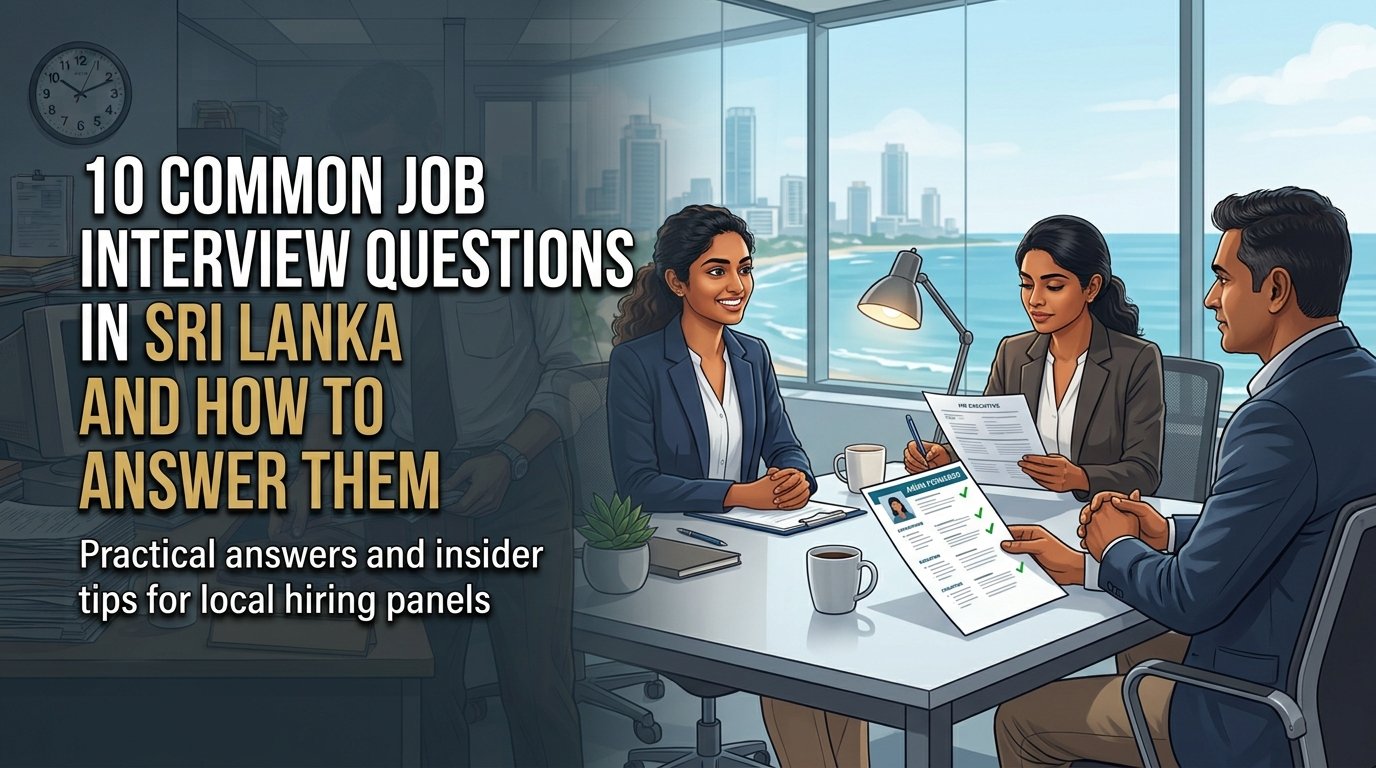
Walking into an interview room in Colombo, Kandy, or Kurunegala carries a very specific kind of pressure. Usually, you are sitting across from two people—an HR executive holding a printed copy of your CV and a department head who just stepped out of an urgent operations meeting. Neither of them wants to waste forty minutes listening to memorized textbook definitions.
Over the past few years of running local job boards and sitting in on dozens of hiring panels for private companies across Sri Lanka, I have watched qualified candidates lose solid offers simply because they gave stiff, rehearsed answers. Conversely, applicants with average grades often walk out with the job because they speak plainly, own their numbers, and show real common sense.
Local interviewers tend to circle back to the same ten questions, regardless of whether you are applying for a branch executive role, a logistics coordinator post, or a digital marketing position. Knowing what they are actually testing behind each question makes answering them far less intimidating.
Here the 10 question i sharing with you.
1. “Tell me a little about yourself.”
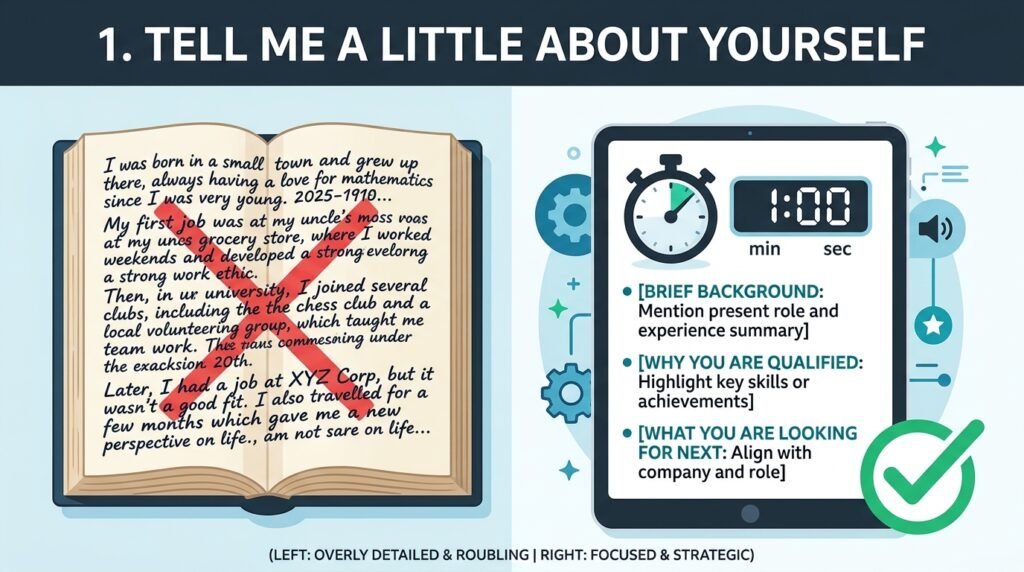
Most candidates ruin the first ninety seconds by reciting their birth town, school name, A/L stream, and every module they studied at university. The interviewer already has your CV sitting right on the table.
What they are really checking: Can you summarize your professional value clearly without rambling?
How to answer: Keep it under one minute. State your current role or qualification, one real achievement with numbers, and why you applied to their specific company.
“I’ve spent the last two years working as an inventory clerk at a spare parts distributor in Panchikawatta, handling daily stock reconciliations for over 800 items. Last quarter, I reorganized our Excel bin-card tracking sheet, which cut our monthly stock-taking errors in half. I applied here because your company manages regional distribution across four provinces, and I want to work with a larger warehouse team.”
2. “Why did you leave your last job?” (Or “Why are you leaving now?”)
Never badmouth a former manager, even if your previous workplace was chaotic or delayed your salary every month. Sri Lanka’s business circles are small; your interviewer might literally know your former boss.
What they are really checking: Are you difficult to work with, or will you quit after six months?
How to answer: Frame your move around growth, learning, or logistics rather than complaints.
“My current team taught me a lot about retail billing and customer handling over the past three years. Now I’m ready for a role where I can manage supplier accounts directly rather than just front-counter entries, and that next step isn’t open at my current branch.”
3. “What do you know about our company Sri Lanka?”
Showing up without checking the company’s website or recent Facebook page tells the panel you sent out fifty blind CVs without caring who replied.
What they are really checking: Did you put in basic effort before walking through our door?
How to answer: Mention two specific facts—their main product line, a recent branch opening, or their target customer base.
“I saw that you supply industrial packaging materials to major tea and apparel exporters around Biyagama and Katunayake, and you recently opened a second storage facility in Ekala. That stood out to me because my previous experience was dealing directly with export factory procurement teams.”
4. “What is your biggest weakness?”
Saying “I work too hard” or “I am a perfectionist” makes experienced HR managers roll their eyes immediately. Everyone knows it is a fake weakness.
What they are really checking: Are you self-aware enough to spot a flaw and fix it?
How to answer: Pick a genuine, non-fatal skill gap and explain the exact habit you built to manage it.
“Early in my career, I used to say yes to every urgent request from different departments without checking my existing deadlines first, which made me rush tasks near 5:00 PM. Now I keep a simple morning priority list and confirm exact delivery times with my supervisor whenever two urgent tasks clash.”
5. “How do you handle pressure when deadlines pile up?”
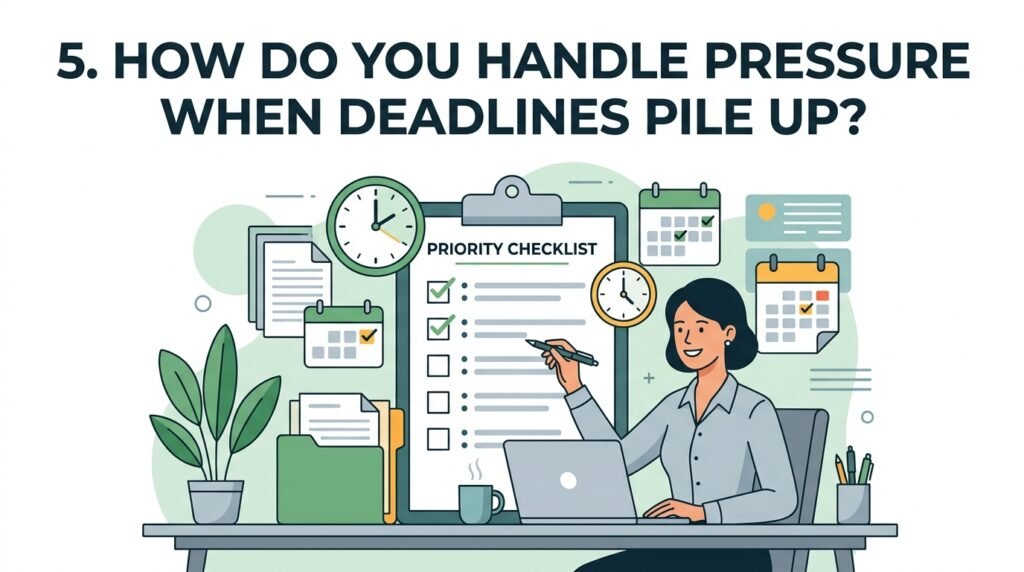
In Sri Lankan offices, month-end closing, sudden import delays, or staff shortages happen regularly. Panels want proof you won’t freeze when three things break at once.
What they are really checking: Do you panic, or do you prioritize?
How to answer: Walk them through one specific high-pressure afternoon and the exact steps you took.
“During last year’s Avurudu rush, our delivery van broke down in Kegalle with twenty urgent orders on board. Instead of waiting for repairs, I called the affected shop owners first to give honest update times, arranged a hired lorry from a local transport agent within forty minutes, and rerouted the perishable items first so nothing spoiled.”
6. “Can you explain this gap in your CV?”
Since the economic shifts of the past few years, six-month or one-year gaps on a CV are far more common than they used to be. Hiding a gap or giving vague excuses raises suspicion.
What they are really checking: Were you sitting idle, or did you stay productive?
How to answer: Be honest, brief, and mention anything practical you did during that time—freelance work, helping a family shop, or finishing a short course.
“After my previous company downsized its regional branch in late 2024, I took four months to look for the right operations role while helping my uncle manage supplier invoicing for his hardware store in Ratnapura. During that break, I also completed an advanced Excel data analysis certificate online.”
7. “Where do you see yourself in three to five years?”
Nobody expects you to predict the exact job title you will hold in 2031. They simply want to know if this job fits your actual direction or if you are just killing time until your student visa arrives next month.
What they are really checking: Will you stick around long enough to make training you worthwhile?
How to answer: Focus on mastering the role in front of you first, then taking on broader responsibility inside their industry.
“Over the next year, my main focus is learning your ERP workflow inside out and becoming someone the team can rely on without constant supervision. Within three to five years, I’d like to grow into a senior coordinator or assistant branch manager role where I’m mentoring junior staff.”
8. “Describe a time you disagreed with a coworker or supervisor.”
Harmony matters deeply in Sri Lankan workplace culture, yet blindly agreeing to a costly mistake just to stay polite hurts the business.
What they are really checking: Can you speak up respectfully without creating office drama?
How to answer: Show how you used facts rather than emotion to resolve a work disagreement.
“My previous supervisor wanted to order six months’ worth of packaging boxes at once to get a bulk discount. I pulled up our past sales sheet showing that two product sizes were being redesigned next quarter, which would have left us with dead stock. Once he saw the numbers, we split the order into two smaller batches and saved storage space.”
9. “What is your expected salary?”
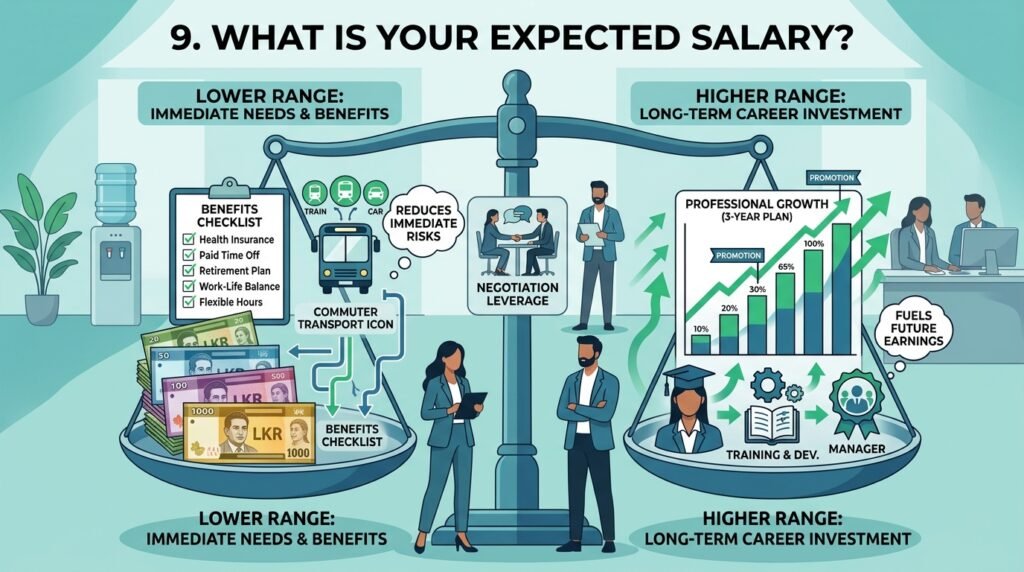
This question makes almost every local applicant nervous. Quote way above the company’s pay band and you price yourself out; quote too low and you struggle to cover bus fares and lunch in Colombo.
What they are really checking: Do your expectations match their approved budget?
How to answer: Give a realistic range based on your experience and daily travel costs, while signaling flexibility if benefits or growth are strong.
“Based on my three years of accounts experience and my daily commute from Gampaha, I’m looking at a monthly gross salary between LKR 85,000 and LKR 95,000. At the same time, I’m open to discussing your full package, including transport allowances or performance bonuses.”
10. “Do you have any questions for us?”
When the panel reaches this final question, saying “No, everything was explained clearly” signals low curiosity. Always keep two practical questions ready in your notebook.
What they are really checking: Are you genuinely evaluating whether this job fits you?
How to answer: Ask about daily expectations or team structure rather than immediately asking about leave days and bonus dates.
“What does success look like for someone in this role during their first three months?” or “Which software tools or internal systems does the team rely on most every day?”
One Last Habit Before You Walk In
Do not try to memorize word-for-word scripts the night before your interview. When nerves kick in inside an air-conditioned boardroom, memorized speeches fall apart the moment an interviewer interrupts you with a follow-up question.
Instead, write down three short bullet points on a piece of paper—one mistake you fixed, one deadline you saved, and one number that proves you worked hard at your last job or internship. Keep those three real stories fresh in your head, sit up straight, speak clearly, and treat the conversation like two professionals solving a problem together.
More related posts: Click here