
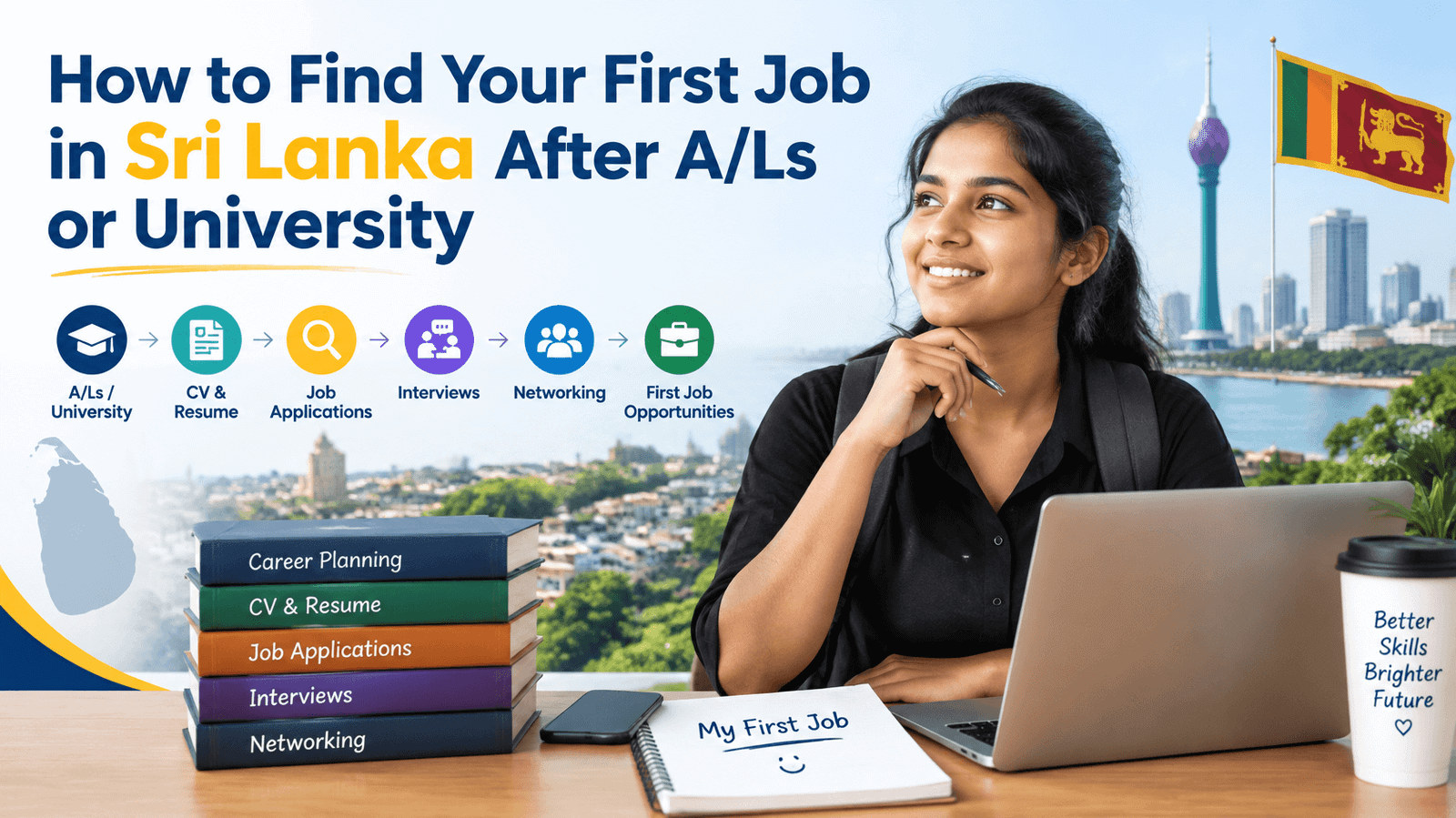
Finishing your G.C.E. Advanced Level exams or walking out of your final university viva feels like crossing a finish line. Two weeks later, reality hits. You have a fresh certificate, zero full-time work history, and relatives asking every Sunday when you are starting work.
Sri Lanka’s youth job market is tough right now. Data released by the Department of Census and Statistics in late 2026 put youth unemployment at 17.8%, climbing even higher among young women and graduates with advanced academic credentials. Most entry-level applicants lose out not because they lack talent, but because they wait passively for newspaper ads instead of treating job hunting like a practical project.
Stop Waiting for Z-Scores or Convocation Dates

The biggest trap after A/Ls is sitting idle for eight months waiting for results and university cut-offs. The same trap hits university students waiting between final exams and convocation.
Employers do not penalize you for being in a transition window. What bothers hiring managers in Kandy, Kurunegala, or Colombo is a blank eight-month gap with nothing to show for it. Pick up short-term work, a paid traineeship, or a technical certification right away. Even three months handling customer calls at a regional bank branch, assisting with stock audits at a hardware distributor in Pelmadulla, or managing social media for a boutique hotel in Ella proves you can show up on time and deal with real customers.
If you want structured technical credentials before entering the private sector, look at NVQ-certified apprenticeship pathways through the National Apprentice and Industrial Training Authority (NAITA). Their district offices across the island connect school leavers with hands-on industrial, ICT, hospitality, and engineering placements rather than pure classroom theory.
Build a CV That Passes a Ten-Second Scan
Recruiters reviewing two hundred CVs for one junior executive opening spend less than ten seconds on each PDF. Fancy Canva graphics, colorful progress bars claiming “90% Microsoft Word,” and school prefect lists from Grade 8 actually hurt your chances.
Keep your first CV to a single clean page—two pages maximum if you have completed university research or an internship. Put the evidence an employer cares about near the top:
- Practical output over club titles: Instead of writing “Member of the Commerce Society,” write “Managed ticket sales and Rs. 180,000 budget for the annual school trade fair.”
- Tools you actually know: List specific software—Excel pivot tables, QuickBooks, Canva, Python, AutoCAD, or POS billing systems—rather than vague phrases like “good computer literacy.”
- Local context that matters: Mention your district or current city clearly so HR knows whether you can commute to their branch without relocating, plus the languages you can work in comfortably (Sinhala, Tamil, and English).
- A clean file name: Save your document as
Kasun-Perera-Accounts-Trainee-CV.pdf, neverNew_Doc_Final(2).pdf.
Where Real Entry-Level Openings Hide
Scrolling one job portal and clicking “Easy Apply” fifty times rarely lands interviews. Different sectors in Sri Lanka hire through completely different channels:
| Target Path | Best Places to Look | Practical First Move |
|---|---|---|
| Management Trainee & Corporate Roles | Company career pages (MAS, Hayleys, John Keells, LOLC, Dialog), LinkedIn | Apply directly during annual intake windows and message junior HR recruiters politely |
| Regional Banking, Retail & Logistics | Local branch notice boards, regional chambers of commerce, newspaper weekend supplements | Walk into regional offices with a printed CV and ask for the branch operations manager |
| Vocational, Technical & Trade Roles | NAITA district offices, Vocational Training Authority (VTA), industrial zone factories | Enroll in a short NVQ Level 3 or 4 apprenticeship with guaranteed factory attachment |
| Startups, Digital Agencies & BPOs | LinkedIn posts, founder X/Facebook communities, university career guidance units | Send a short portfolio link or 3-sentence email showing a sample of your actual work |
University students often overlook their own Career Guidance Unit (CGU). Companies regularly send internship quotas straight to faculty coordinators before posting them publicly. Visit your CGU office in person rather than waiting for a batch WhatsApp forward.
Know Your Legal Pay Floor Before Signing Anything
Eagerness to land your first job should never push you into illegal underpayment.
Under the National Minimum Wage of Workers (Amendment) Act, No. 11 of 2025, the statutory national minimum wage across all private-sector industries and services in Sri Lanka stands at Rs. 30,000 per month (or Rs. 1,200 per day) effective from January 1, 2026. Employers are also required to contribute to your EPF and ETF once you are employed, subject to statutory rules overseen by the Department of Labour.
Check your appointment letter carefully before your first shift. Watch out for “unpaid training” arrangements that drag on for six months without a formal internship agreement or stipend. Legitimate trainee programs put your monthly allowance, working hours, probation period, and confirmation criteria in writing from day one.
How to Handle Interviews When You Have Zero Experience

Every interviewer knows you are fresh out of school or campus. Nobody expects you to quote five years of corporate war stories.
What they test instead is coachability, basic preparation, and honesty. Before walking into an interview—or joining a Google Meet call from home—spend twenty minutes learning what the company actually sells, who their customers are, and what the job description asks for. If an interviewer asks a technical question you do not know, say so plainly and explain how you would look up the answer or verify it with a supervisor. Guessing wildly loses trust faster than admitting a gap.
End every interview with two sharp questions of your own. Ask what a typical first thirty days looks like for someone in the seat, and ask which skill separates an average trainee from a standout one. Those two questions alone put you ahead of ninety percent of first-time applicants.
Conclusion
Find your first job in Sri Lanka after A/Ls or university. Learn CV tips, NAITA pathways, hidden job channels, minimum wage laws, and fresher interview strategies.